
Why Is My Side Yard Still Muddy After the Rain Stops?
The rest of your lawn looks dry, but the narrow strip beside your house is still soft and muddy.
Every trip to the trash bins, side gate, or backyard brings dirt onto your shoes.
For Fort Lauderdale homeowners, November is a useful time to investigate these trouble spots after the wetter months. In fact, local weather reporting documented unusually heavy rainfall during September 2026.
Artificial turf may offer a cleaner surface, but it won't fix every drainage problem.
The right solution depends on why that part of the yard stays wet in the first place.
Why Does Water Collect in Narrow Side Yards?
Side yards often have less room for water to spread out.
A fence, exterior wall, walkway, or raised planting bed can limit where rainwater travels. The soil may also become packed down from repeated foot traffic.
When water cannot soak into the ground or move toward a suitable outlet, puddles form.
Some side yards stay damp because they receive little direct sunlight. Others collect runoff from nearby roofs or paved areas.
These conditions can overlap.
For example, a homeowner may have a narrow passage with a downspout directing water toward the fence. Even after the surrounding lawn dries, that section remains muddy.
Fort Lauderdale experienced particularly wet conditions in September 2026. A regional report on the 2026 rainy season documented substantial rainfall at local weather stations.
However, not every wet patch is caused by an unusually rainy month.
If one area stays muddy long after nearby soil dries, the property's grading and drainage deserve attention.
Start by observing where water comes from during the next rain.
You may discover a blocked outlet, a downspout problem, or soil that has settled into a low spot.
Can Artificial Turf Actually Fix a Muddy Area?
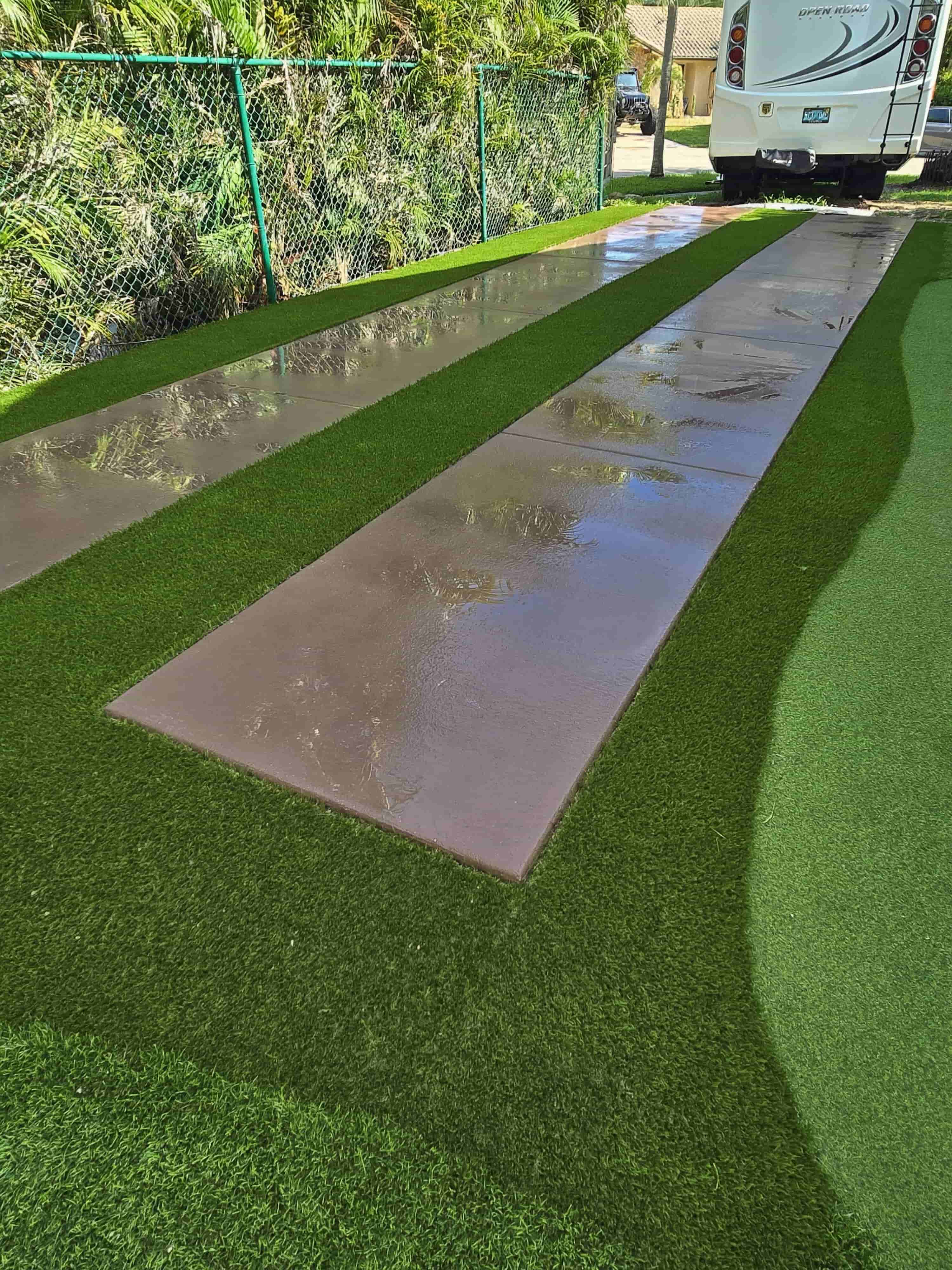
Artificial turf can replace worn grass and exposed soil with a more consistent walking surface.
That means fewer muddy footprints during everyday trips through the side yard.
It also eliminates the need to mow a narrow strip where lawn equipment may be difficult to use.
However, the turf itself doesn't make water disappear.
A complete installation includes a prepared base, drainage planning, and suitable materials beneath the visible grass.
If water already collects because the ground slopes toward the house, covering the area with synthetic turf won't automatically solve the problem.
The University of Florida also notes that synthetic turf installations can affect stormwater runoff.
For this reason, drainage should be part of the initial plan rather than an afterthought.
Some properties may need grading corrections or another drainage solution before turf installation makes sense.
Others may only need a properly prepared surface and a clear path for water to move away.
A qualified installer should explain which conditions apply to your yard.
Be cautious of anyone who promises that artificial grass alone will eliminate standing water.
What Should a Good Installation Plan Include?
Before choosing the grass color or blade length, look at the space itself.
Measure the usable width and identify everything that needs regular access.
A side yard may contain air-conditioning equipment, utility connections, gates, or drainage structures. These features should remain accessible after installation.
Next, discuss how the ground will be prepared.
A useful installation plan should address:
- Existing slope: Where does rainwater currently travel?
- Base materials: What will support the turf and allow planned drainage?
- Edges: How will the grass meet fences, paving, and planting beds?
- Access: Can equipment and utility areas remain easy to reach?
- Maintenance: How will debris be removed from the finished surface?
The installer should also explain how water will leave the area without creating problems for neighboring property.
This matters because a clean-looking surface can hide poor drainage underneath.
For narrow passages, the finished height is important, too.
Installing turf too high against a doorway, vent, or paved surface can create new problems. Proper transitions help the finished area remain practical.
Ask to see the proposed layout and discuss any locations where water has collected before.
November offers an opportunity to review the damage left by rainy weather, but occasional heavy storms can still occur. The drainage plan should account for real conditions, not assume every future month will be dry.
How Do You Decide Whether Turf Is the Right Fix?
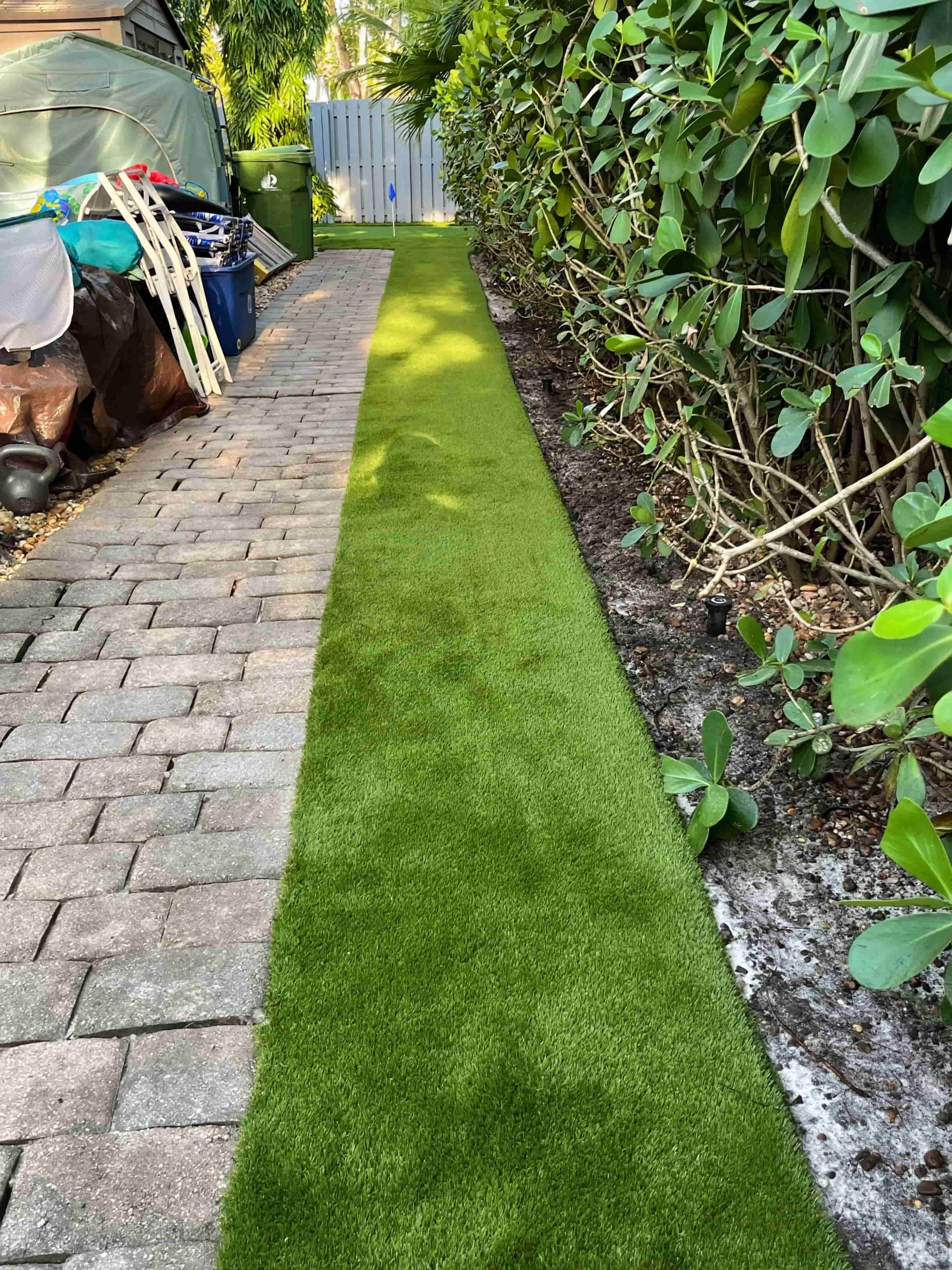
The best solution depends on how the side yard is used.
Is turf worth installing in a side yard nobody sees?
It can be, especially when the space connects frequently used areas. A cleaner walking route may matter more than appearance.
What if standing water remains for days?
Investigate the drainage problem first. Turf installation should not replace a necessary drainage correction.
Will artificial grass need maintenance?
Yes. You'll still need to clear debris, brush flattened areas when appropriate, and check that drainage remains open.
Could another material work better?
Possibly. Pavers, gravel, or a combination of hardscape and planting may suit some spaces better.
A good decision begins with the source of the mud, not the product.
Turn Your Muddy Side Yard Into a More Useful Passage
You shouldn't have to avoid one part of your property every time it rains.
At Redline Turf & Lighting, we offer residential artificial turf installation with attention to site preparation and drainage.
If you're considering turf for a muddy passage, contact our team to discuss the area and request an estimate. We'll help you evaluate whether artificial grass is a practical fit.