
Is Artificial Grass a Good Idea Beside My Pool?
A swimming pool can look beautiful, but the area around it isn't always easy to maintain.
Grass clippings end up in the water. Bare patches turn muddy. Wet feet carry dirt onto the deck and into the house.
If you're planning backyard improvements in Boca Raton, FL, November can be a good time to rethink how your pool area works before the outdoor entertaining season gets busy.
Artificial turf offers a green alternative to natural grass, but it's not the right choice for every part of a pool.
Before installing it, consider drainage, surface temperature, comfort, and how people move around the pool.
What Problems Can Turf Solve Around a Pool?
Natural grass looks inviting beside a swimming pool, but it can be difficult to maintain in areas that receive constant foot traffic.
People often take the same route between the patio, pool steps, and outdoor seating.
Over time, these routes can develop thin grass or exposed soil.
Lawn maintenance creates other challenges. Grass clippings, fertilizer, and loose dirt may reach the water if the area isn't managed carefully.
Artificial turf removes the need for mowing or fertilizing the covered section.
It can also provide a consistent green appearance along pool borders and nearby outdoor living areas.
For example, a narrow strip between the pool deck and a fence may be difficult to mow. Replacing that strip with suitable artificial grass could make routine upkeep simpler.
However, synthetic turf doesn't eliminate every cleaning task.
Leaves, sunscreen residue, food spills, and other debris still need attention.
It also doesn't guarantee a slip-free surface. Wet conditions, footwear, and the materials beneath the turf can affect traction.
Think about the actual problem you're trying to solve.
If the main issue is grass clippings or worn spots, turf may be useful. If water regularly flows toward the pool or house, investigate drainage before choosing the surface.
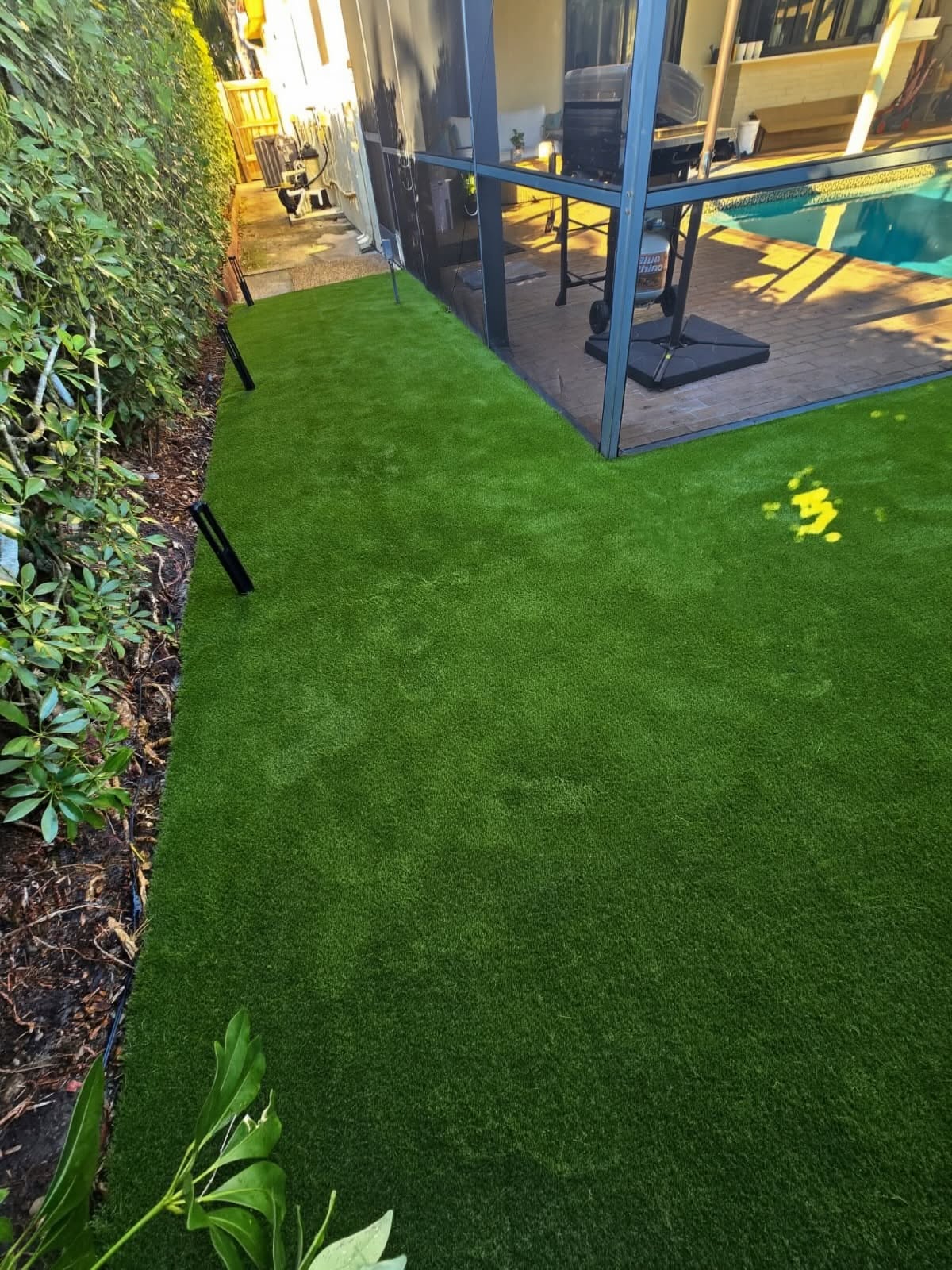
What Could Go Wrong With a Poor Poolside Installation?
The biggest problems often begin below the visible grass.
A poolside area may receive water from splashing, rain, nearby planters, and routine cleaning.
If that water has nowhere to go, it can collect beneath the turf or move toward nearby structures.
Proper grading and base preparation matter as much as the turf itself.
Another concern is surface heat.
Artificial grass can become extremely hot in direct sunlight, even when the weather feels comfortable.
The University of Florida warns that synthetic turf surfaces can reach unsafe temperatures.
This is especially important around pools because people often walk barefoot.
Don't assume that a green surface will stay cool just because natural grass usually feels cooler than paving.
Ask about the manufacturer's heat-related information and test the surface under expected conditions.
Chemical exposure also deserves attention.
Pool water and cleaning products may contact the grass regularly. Ask whether the proposed turf materials are suitable for that environment and how spills should be handled.
Finally, watch the edges.
A loose or uneven transition between artificial grass and pool decking can create a tripping concern.
The finished installation should feel like one carefully planned outdoor space, not two unrelated surfaces pushed together.
Which Design Choices Matter Most for Comfort and Care?
Start by deciding where turf would actually improve the pool area.
It may work well as a decorative border, a lawn section beyond the deck, or a connection between outdoor seating and landscaping.
However, traditional pool decking may remain the better choice for some high-use walking areas.
Consider these factors before approving a design:
- Drainage: Where will rain and splash water travel?
- Surface height: Will the turf meet the pool deck evenly?
- Sun exposure: How hot could the surface become?
- Cleaning needs: Can debris be removed without entering the pool?
- Appearance: Will the turf complement nearby plants and paving?
Material selection matters, but installation details often determine how practical the finished area feels.
A soft-looking turf product may not be comfortable under bare feet during a hot afternoon.
Similarly, a dense artificial lawn may look attractive but still need regular brushing in areas with frequent foot traffic.
Think about furniture placement, too.
Heavy tables, loungers, and decorative pots may flatten turf fibers if they stay in one position.
If the space will hold outdoor furniture year-round, discuss whether paving would be more practical beneath those items.
November is a useful time to inspect existing worn areas and plan changes. Still, warm days and strong sunlight remain possible throughout the season.
Choose materials for year-round conditions rather than the weather on installation day.
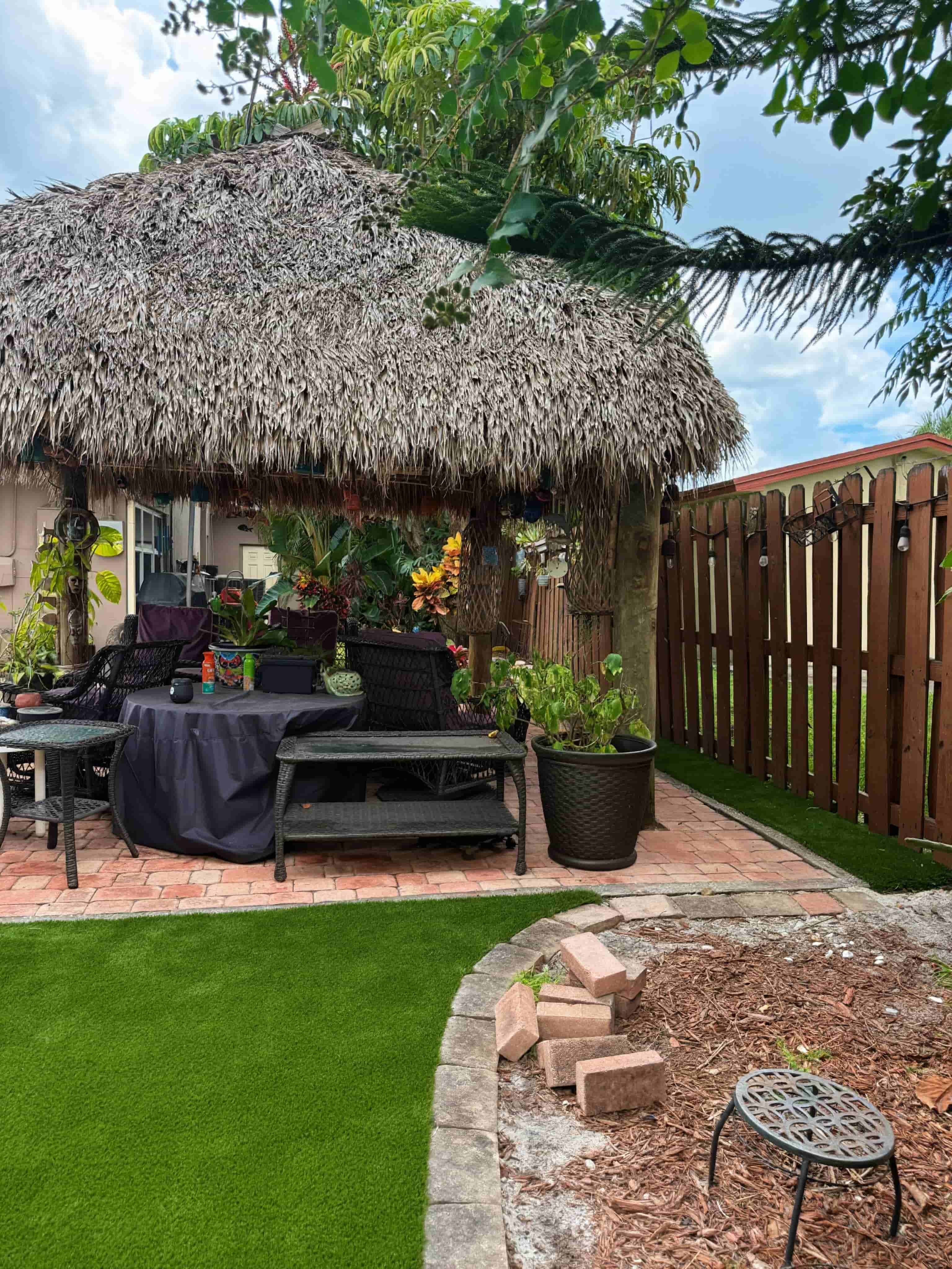
How Can You Compare Turf With Other Poolside Materials?
Artificial turf works best when its advantages match how you use the space.
Is artificial grass better than pavers?
Neither is automatically better. Pavers may suit seating areas and main walking routes, while turf can add a softer green appearance in selected sections.
Will pool water drain through artificial turf?
Water can pass through suitable turf backing, but drainage depends on the entire installation and where the water goes afterward.
Can children play on artificial turf beside a pool?
They can use suitable turf when conditions are safe. Always check surface temperature and provide appropriate supervision around water.
Does turf need regular cleaning near a pool?
Yes. Remove debris, address spills, and follow the manufacturer's care instructions.
The strongest design may combine turf with other materials instead of using artificial grass everywhere.
Plan a Poolside Lawn That Looks Good and Works Well
Your pool area should be comfortable to use, not simply attractive in photographs.
At Redline Turf & Lighting, we provide residential artificial turf installation for outdoor spaces with different layouts and maintenance needs.
If you're considering artificial grass around your Boca Raton pool, contact us to review the area and discuss a design that balances appearance, drainage, and everyday comfort.